Analysis of Change in Graphic Organizers: Subject E
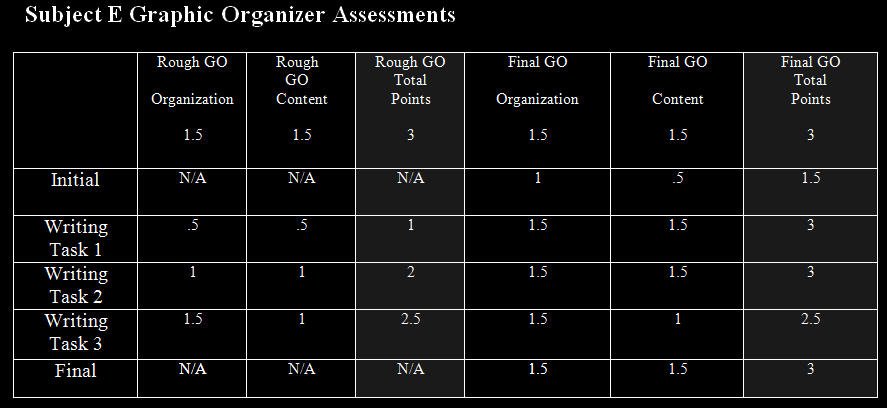
Subject E showed significant and consistent change in organization and idea
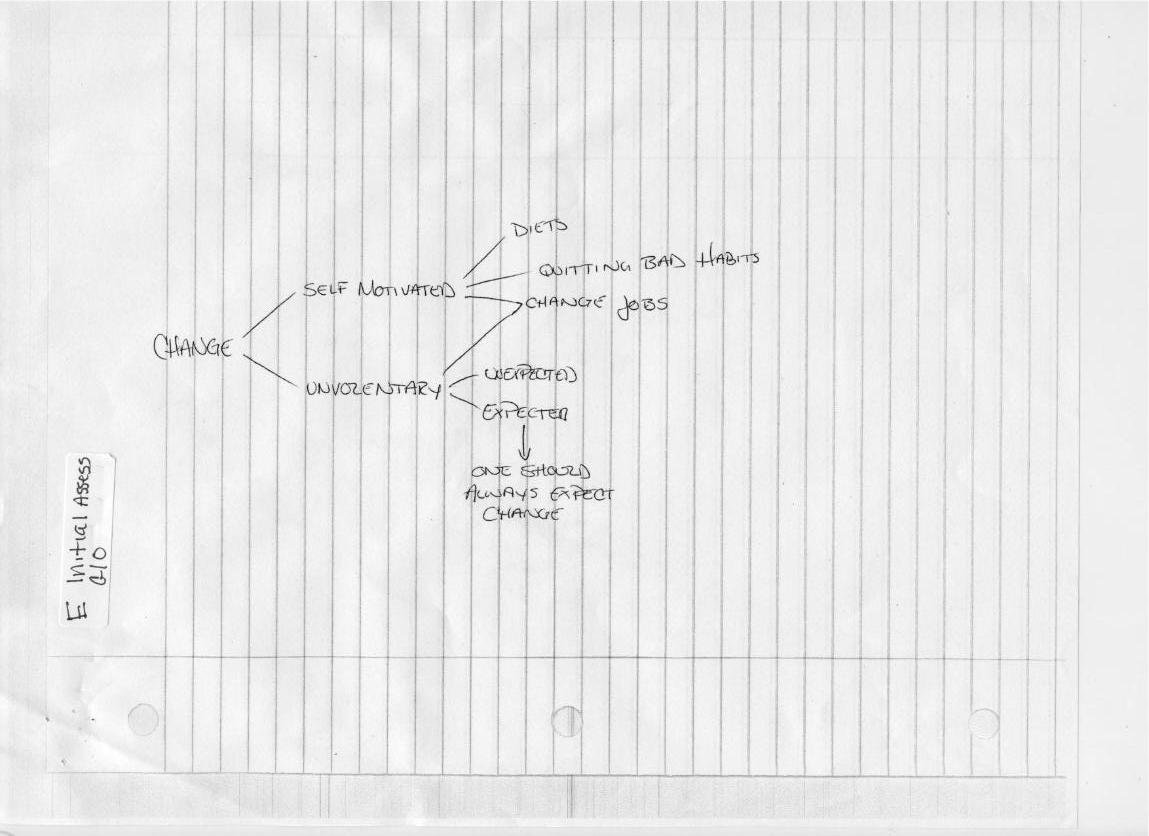
development in his graphic organizers. For his initial assessment, Subject E created a basic
graphic organizer that illustrated the hierarchical order of his ideas and expressed the
central idea and subconcepts in one-word representations. Several of the subconcepts
themselves were broad topics, and none were supported by specific details.
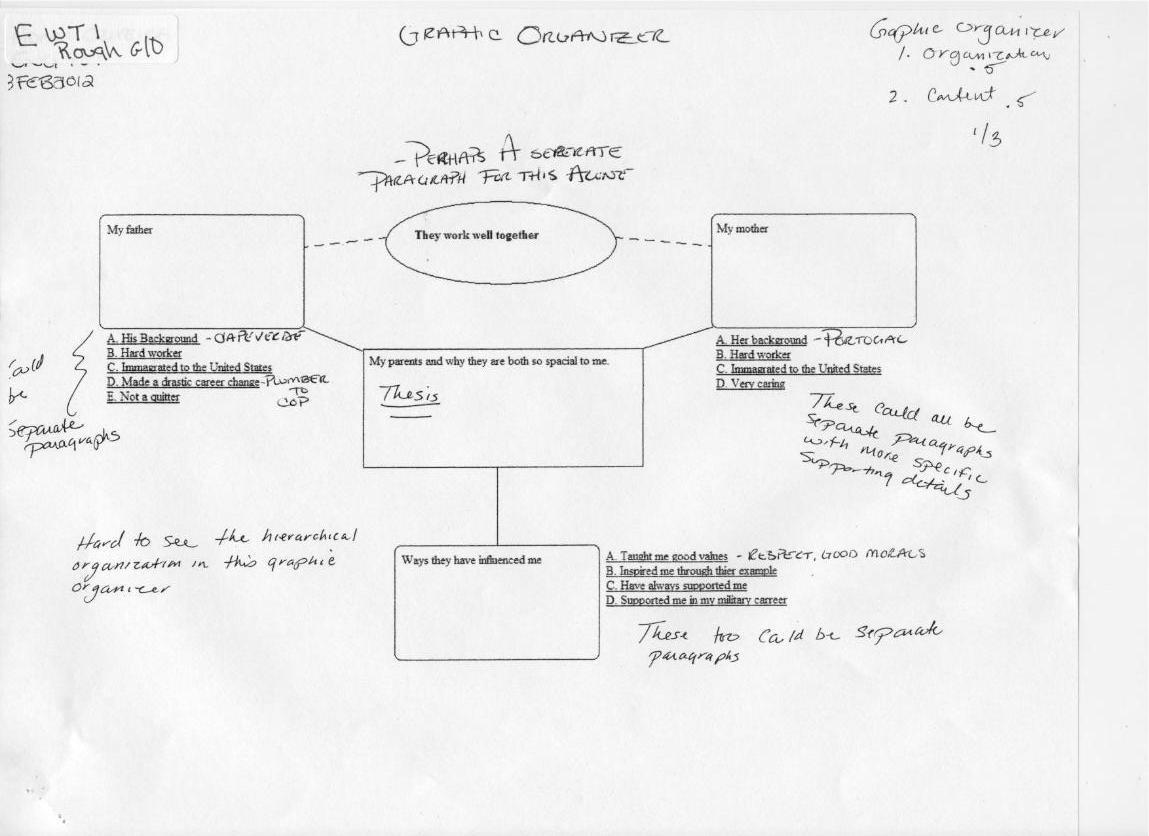
For Writing Task 1, Subject E created a rough graphic organizer and then a revised
organizer based on teacher feedback. In the rough graphic organizer the thesis was not
differentiated hierarchically from the subconcepts. Visually, it was initially difficult to
determine which idea was the central idea. Also the subconcepts and the supporting details
were broad. For example, the thesis idea was that his parents are special. One subconcept
listed “father” as a controlling idea. Beneath that, in the space designated for specific
supporting details, Subject E listed “his background, hard worker, immigrated to the U.S,
made a drastic career change, and not a quitter.” Each of these could have been
subconcepts and whole paragraphs rather than specific supporting details.
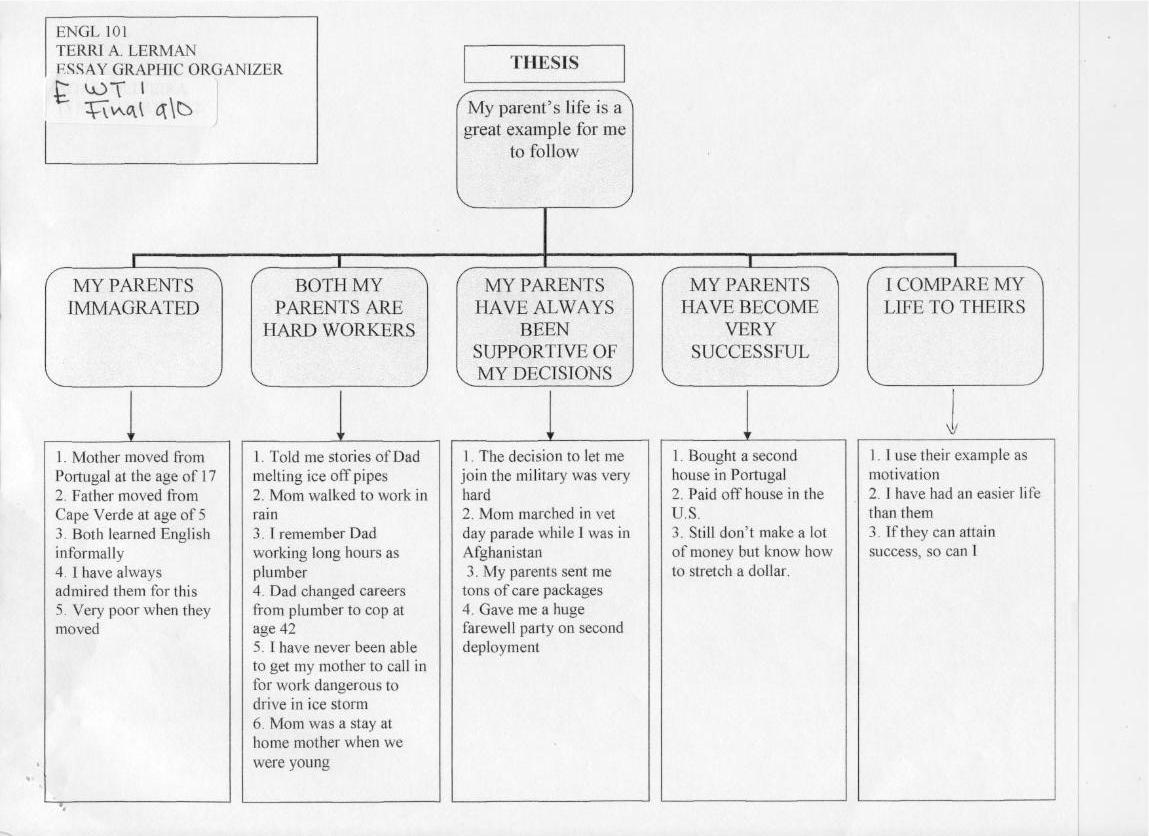
The final draft of the graphic organizer for Writing Task 1 showed significant revision
and a better grasp of the hierarchical nature of the ideas in the composition. The
subconcepts that support the thesis were more focused. For example, one subconcept
stated that, “both my parents are hard workers.” Beneath this was a list of specific details
that included, “stories of dad melting ice off pipes, mom walked to work, “ and “dad
working long hours as a plumber.” The changes were significant.
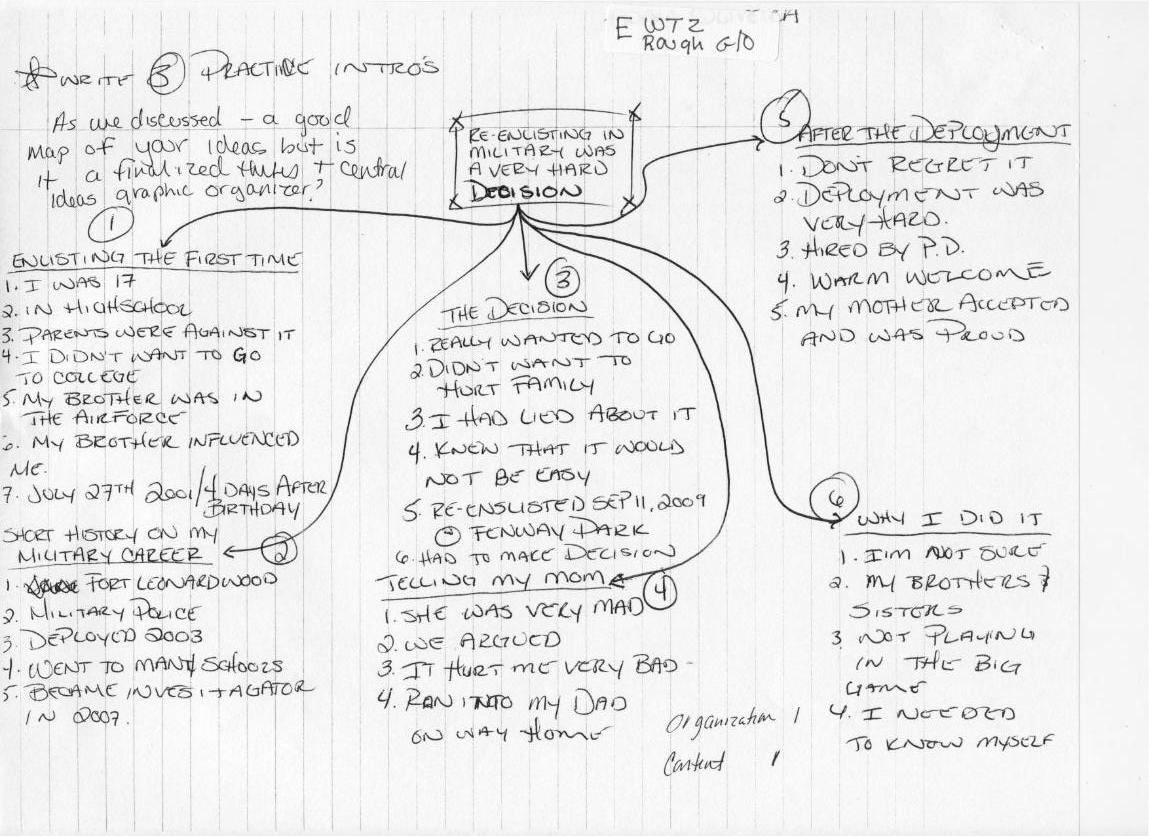
For Writing Task 2, Subject E created a rough graphic organizer that reflected a better
understanding of the organization of ideas. While the thesis and the subconcepts were
different than those in the final graphic organizer for this assignment, the supporting
details were more specific in some instances although this was still not consistently true.
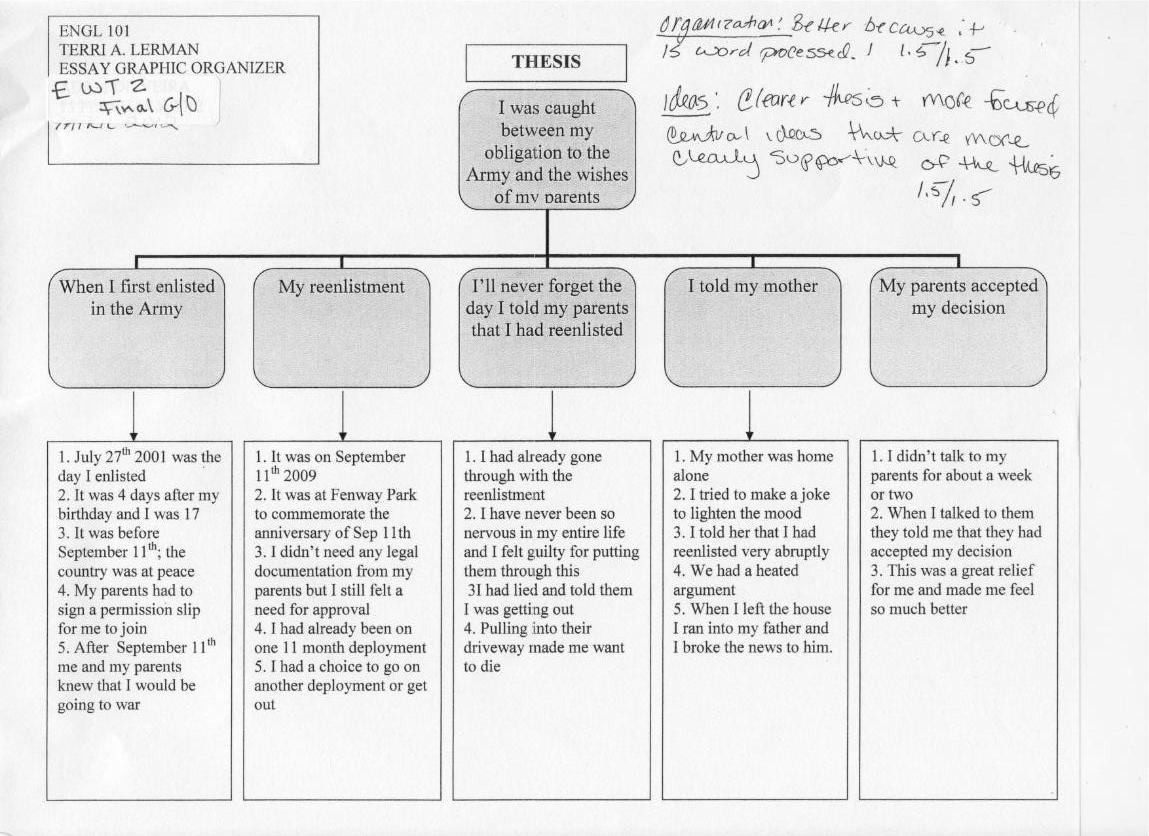
In the final graphic organizer for Writing Task 2, however, Subject E revised his graphic
organizer significantly. The thesis became more focused and sophisticated. In the first and
rough graphic organizer his central idea was that, “reenlisting in the military was a very hard
decision.” In his final organizer the thesis evolved and focused on being “caught between
my obligation to the army and the wishes of my parents.” This new focus allowed the
subconcepts to evolve as well. The first subconcept was “when I first enlisted” and was
supported by specific narrative details. The second subconcept was “my reenlistment” and
again the details were specific. Each of the following three subconcepts and their details
reflected an enhanced understanding of organizational structure of ideas and idea
development. Also, the graphic organizer was visually arranged to clearly define the
hierarchy of ideas.
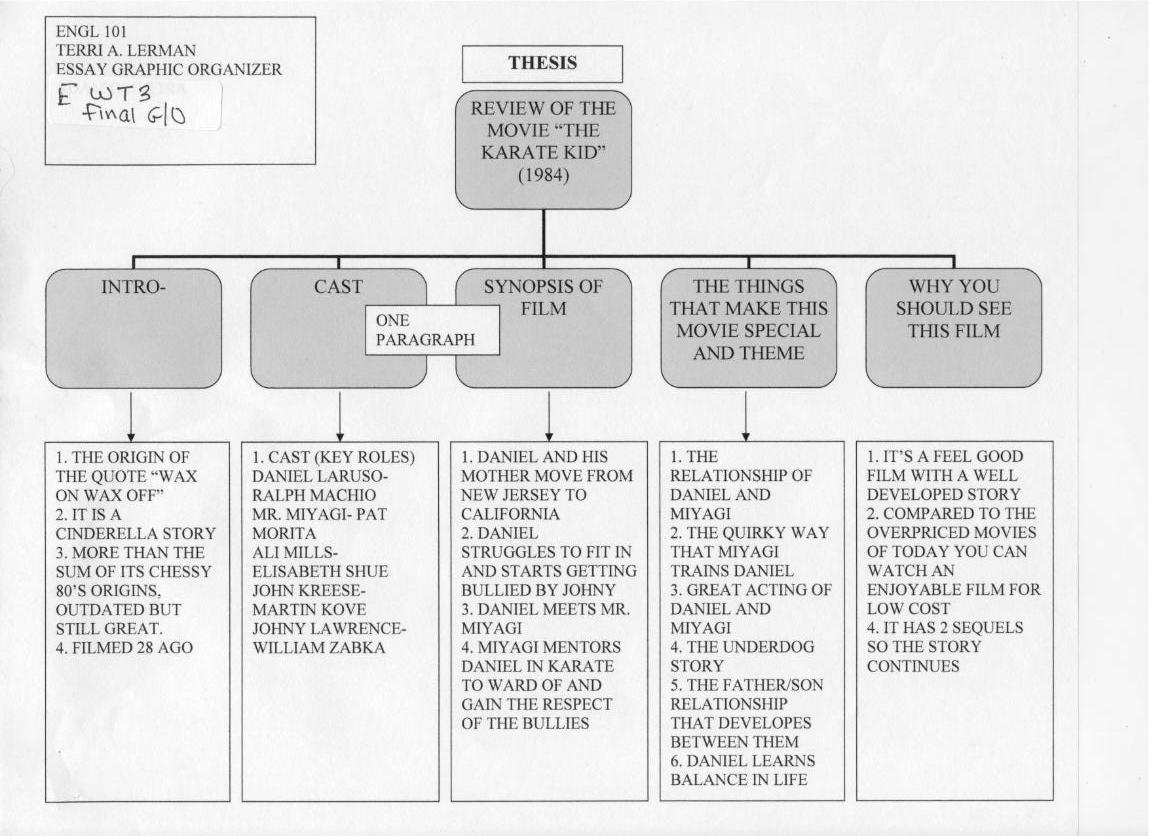
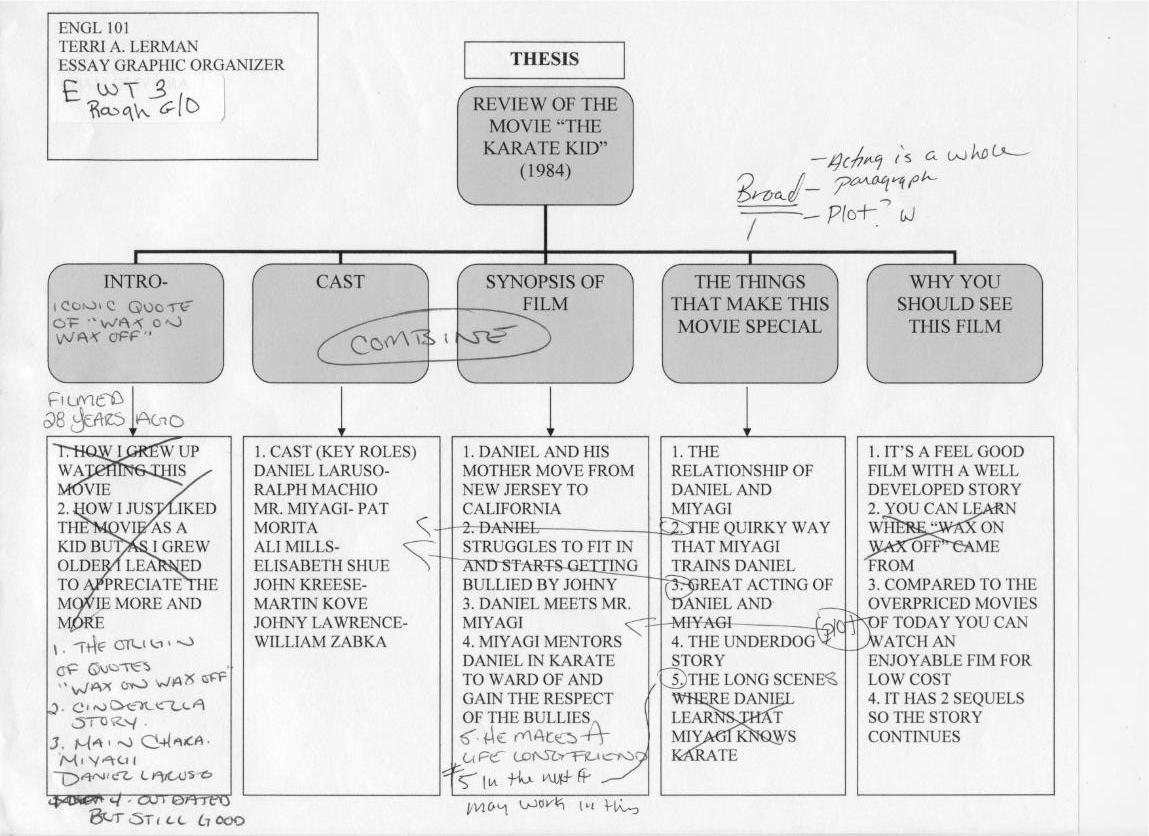
For Writing Task 3, Subject E needed to do very little revision on his graphic organizer for an evaluation of
the film The Karate Kid. The ideas in both the rough draft and the final draft were hierarchically arranged, with
the thesis clearly supported by subconcepts and specific supporting details. It is interesting to note that Subject E
had begun to include the introduction in his graphic organizer. The first body paragraph subconcept combined an
introduction of cast with “synopsis of film” and the specific support then lists plot details. The second subconcept
was revised in the final organizer to include a discussion of theme and the third subconcept recommended the
film. While this final body subconcept was a bit broad and may also have been construed as a delayed thesis, it
was clear that Subject E had a much clearer understanding of the planning process, organization, and idea
development in graphic organizers.
In the final assessment Subject E created a detailed graphic organizer. In comparison
to the initial graphic organizer its ideas were more clearly arranged to reflect hierarchical
order and the subconcepts developed the thread of central meaning. While some of the
details that supported the subconcepts were broader in nature than in the revised graphic
organizers of the three writing tasks, they further explained and developed their driving
ideas. For example, Subject E’s thesis was that “people do benefit from having many
choices.” For the first body paragraph, he stated that, “some choices are permanent so you
need many options.” Supporting details for this paragraph included, “what if you could only
get one of three tattoos?” as well as some broad ideas that explained the subconcept, such
as “in some instances if there were not enough choices pleople simply wouldn’t choose.”
This graphic organizer was more sophisticated in nature than the initial graphic organizer.