Analysis of Change in Graphic Organizers: Subject D
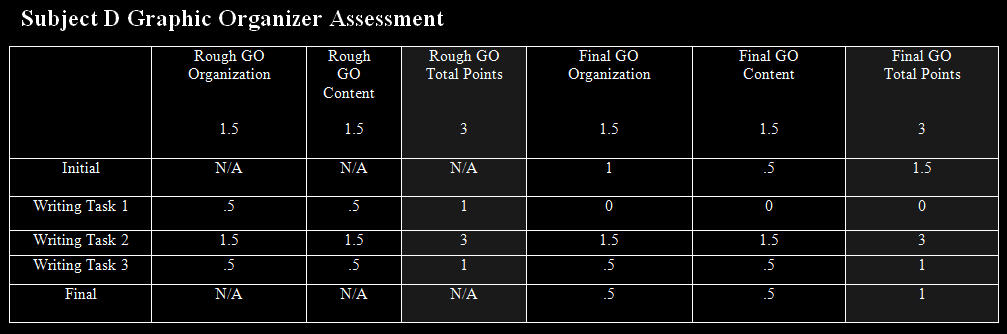
Subject D demonstrated erratic performance in his use of graphic organizers. Lack of
motivation to consistently engage in planning and prewriting strategies led to
inconsistencies. For his initial assessment Subject D created a graphic organizer that
demonstrated an understanding of the organizational relationship between ideas in a
cohesive essay. While the subconcepts were broad they illuminated differentiated support
for an unspecified central idea.
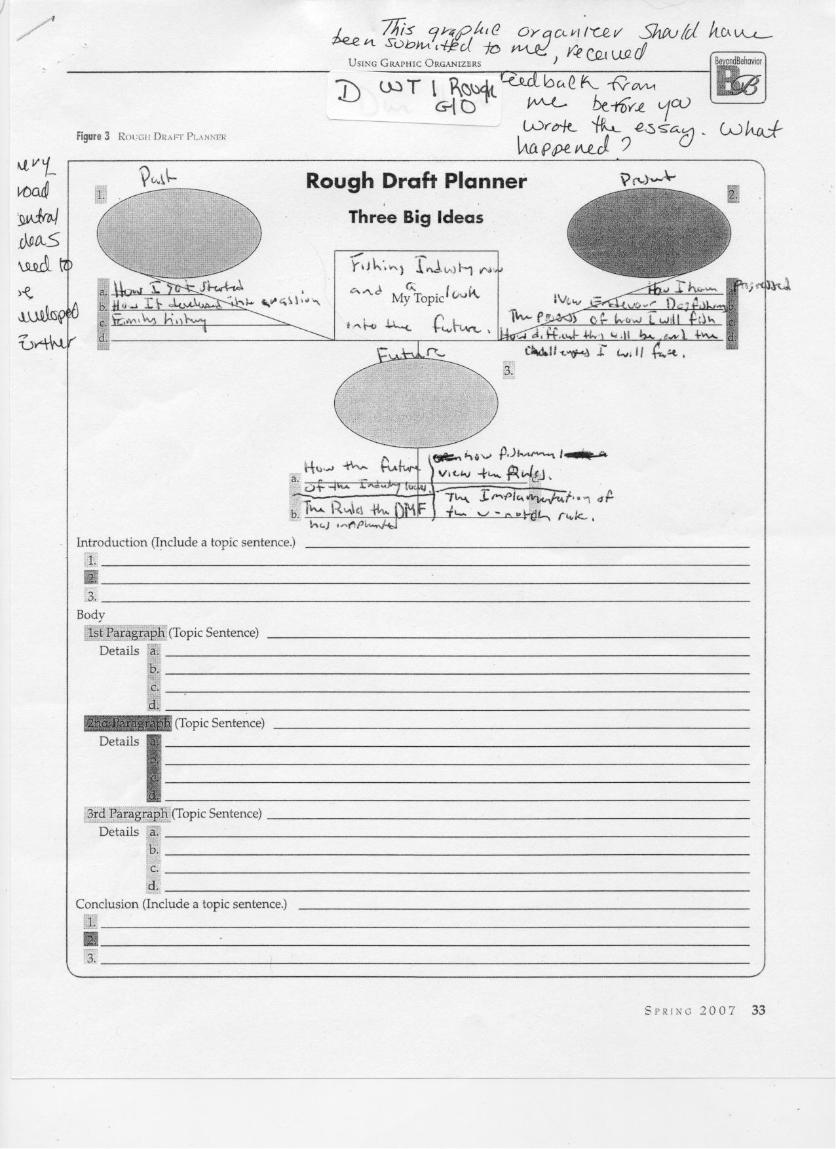
Then for Writing Task 1, Subject D created a rough graphic organizer that he did not
submit for feedback until submission of the final draft of his organizer and the final
composition. In the rough organizer for Writing Task 1, the thesis or central idea was so
broad as to be prohibitive. He focused on “the fishing industry now and a look into the
future.” Subject D labeled his first subconcept “the past” and underneath this heading he
listed “how I got started, how it developed into a passion, and family history. The second
subconcept was labeled “present” and beneath this were equally broad topics such as “how I
have progressed” and “the challenges I will face.”
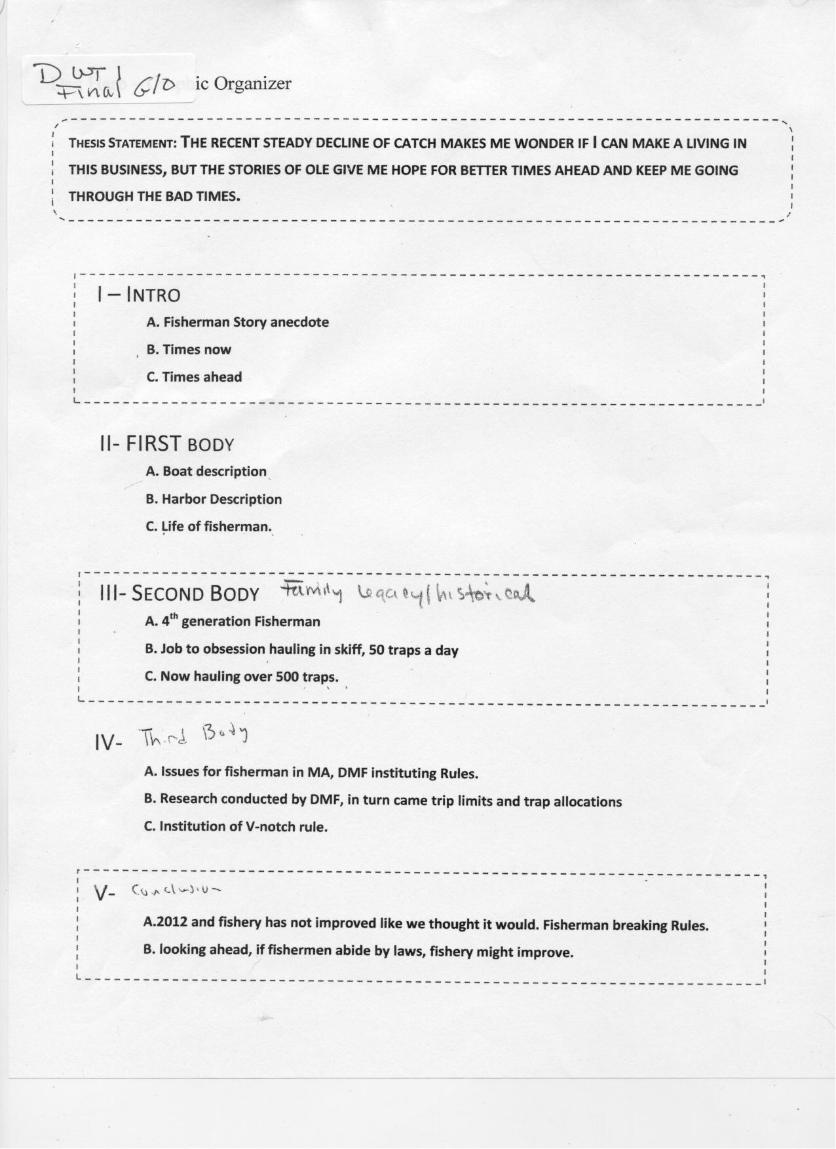
In his final draft of the graphic organizer for Writing Task 1, Subject D used a different
format that was more like an outline. Each section was labeled by type rather than topic. For
example, the introduction was labeled “intro” and the second paragraph is labeled “first
body.” These headings make it impossible to know what the controlling idea of each
paragraph was. Also, under the headings for the first and third body paragraphs were lists
of equally broad ideas that could be subconcepts for separate paragraphs. For example,
under the heading “first body,” Subject D listed “boat description, harbor description, life of
fisherman.” These were huge ideas worthy of their own paragraphs, and their placement in
the organizers suggests that Subject D believed that they could have been used as
supporting details.
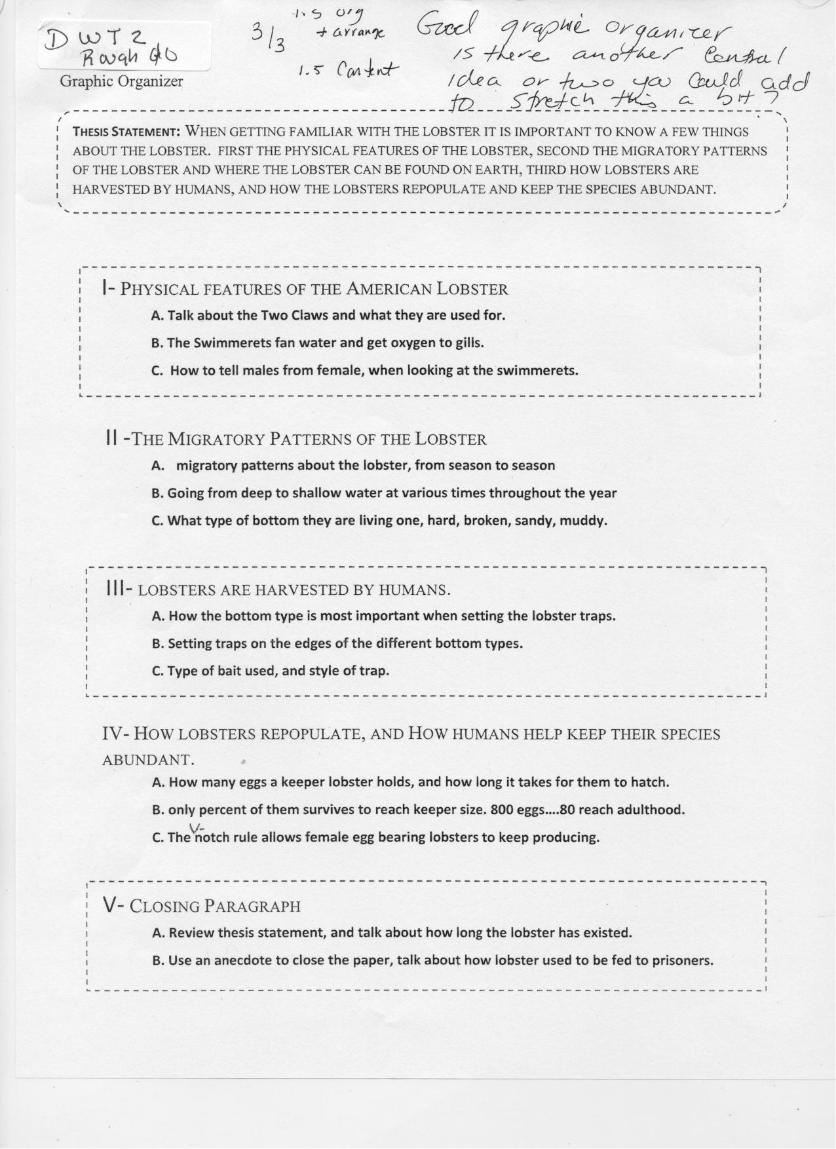
For Writing Task 2, Subject D created a rough graphic organizer that reflected an
understanding of organization and idea development. Instead of general headings that
reflected paragraph type or number, each paragraph had a topic with more specific details
placed to demonstrate the hierarchical nature of the ideas. Body paragraph one’s topic was
the “physical features of the American Lobster.” Specific details were listed beneath the
topic. In the second body paragraph, Subject D listed “the migratory patterns of the
lobster” as the topic. Again, details of these patterns were listed below the topic. Two
more body paragraphs followed the same format.
Subject D turned in a final copy of this graphic organizer, but it was unchanged from
the rough organizer. Nonetheless, it was clear that Subject D has a strong understanding
of organization and idea development for this writing task.
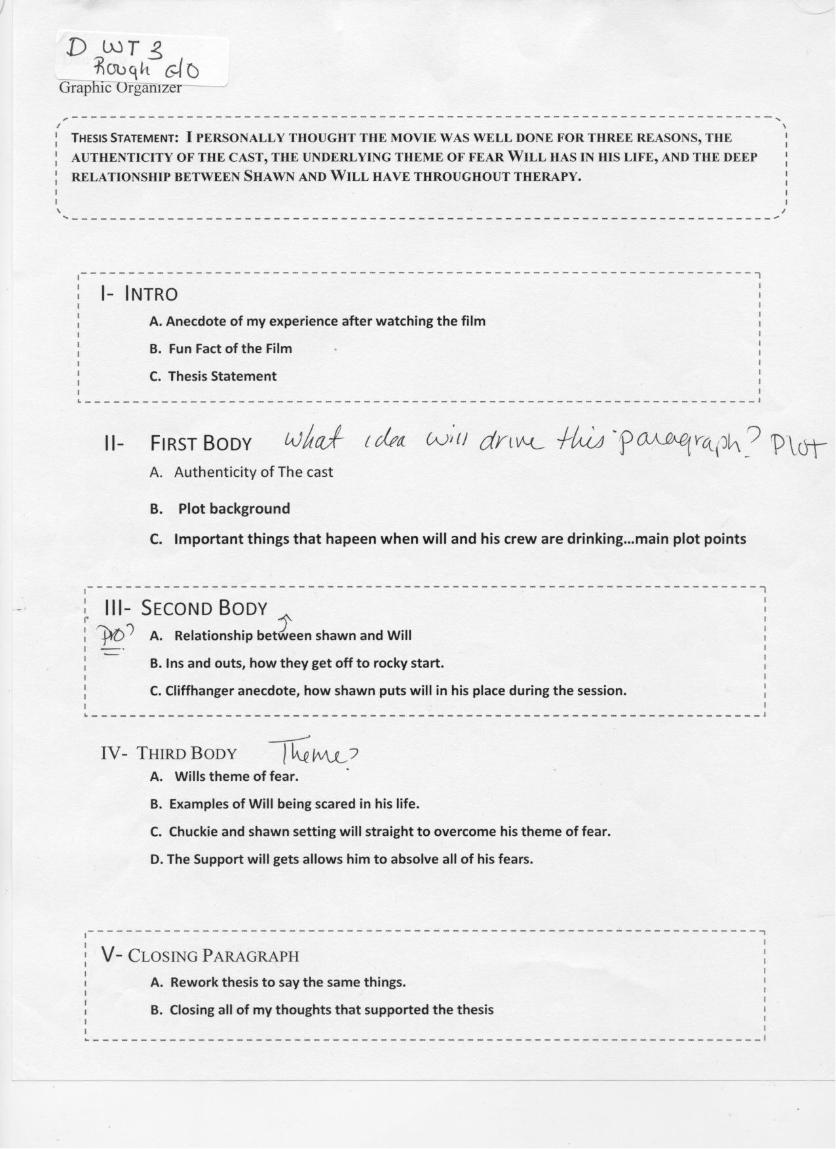
For Writing Task 3, Subject D reverted back to the graphic organizer format he used
for Writing Task 1. Instead of using topics as headings for each paragraph, he used
paragraph names such as “first body,” “second body,” and “closing paragraph.” Although
teacher feedback suggested the need for revision of this format to include ideas placed in a
more hierarchical and idea-driven structure, the final draft reflected no change in
comprehension of this concept. Also, again the supporting details listed beneath the
paragraph headings were broad and could be subconcepts themselves. They were not
specific.
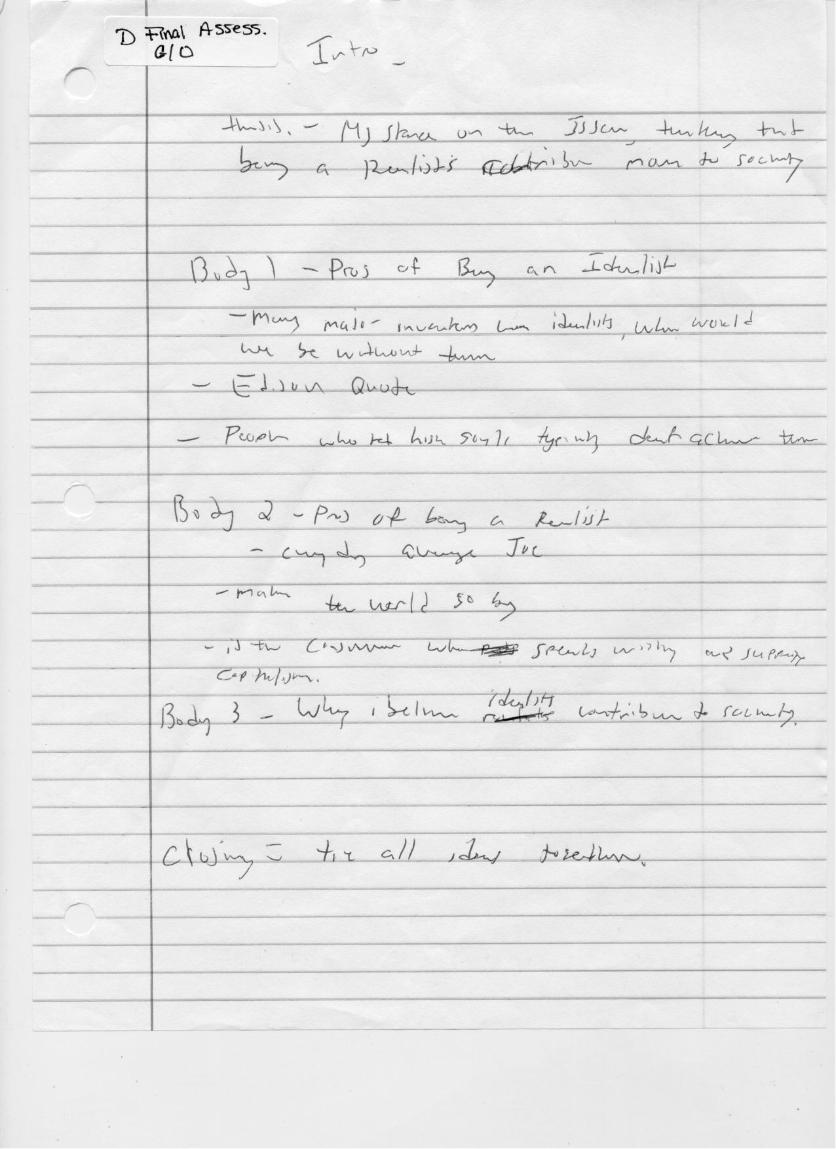
In his final assessment, Subject D created a graphic organizer with broad subconcepts
that were closer to thesis statements. For example, the thesis for the composition was that
“being a realist contributes more to society” than being and idealist. The first body
paragraph listed as its subconcept the “pros of being an idealist.” The second body
paragraph listed the “pros of being a realist,” and the third body paragraph focused on “why
being and idealist contributes to society.” The thesis seemed to have changed while each
subconcept is so broad as to have been prohibitive. Also, rather than choosing one position
to argue more specifically, Subject D had included arguments on both sides of the issue.