Analysis of Change in Graphic Organizers: Subject C
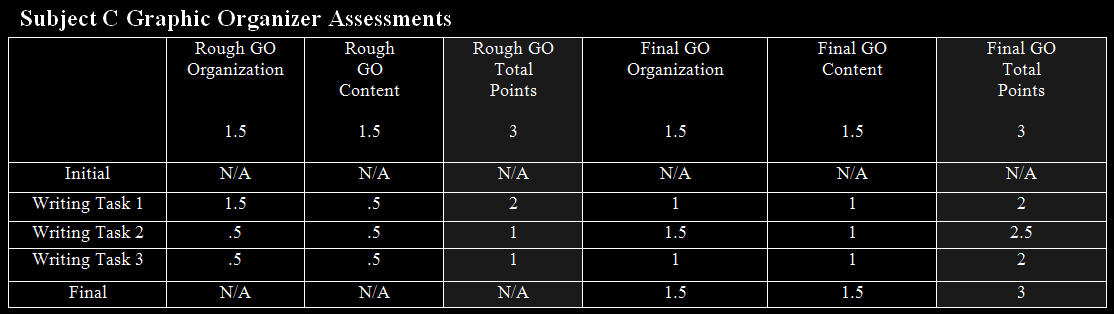
Subject C showed significant change in organization and idea development in her
graphic organizers yet continued to struggle with including specific details within the
subconcept categories. For the initial assessment, Subject C did not create a graphic
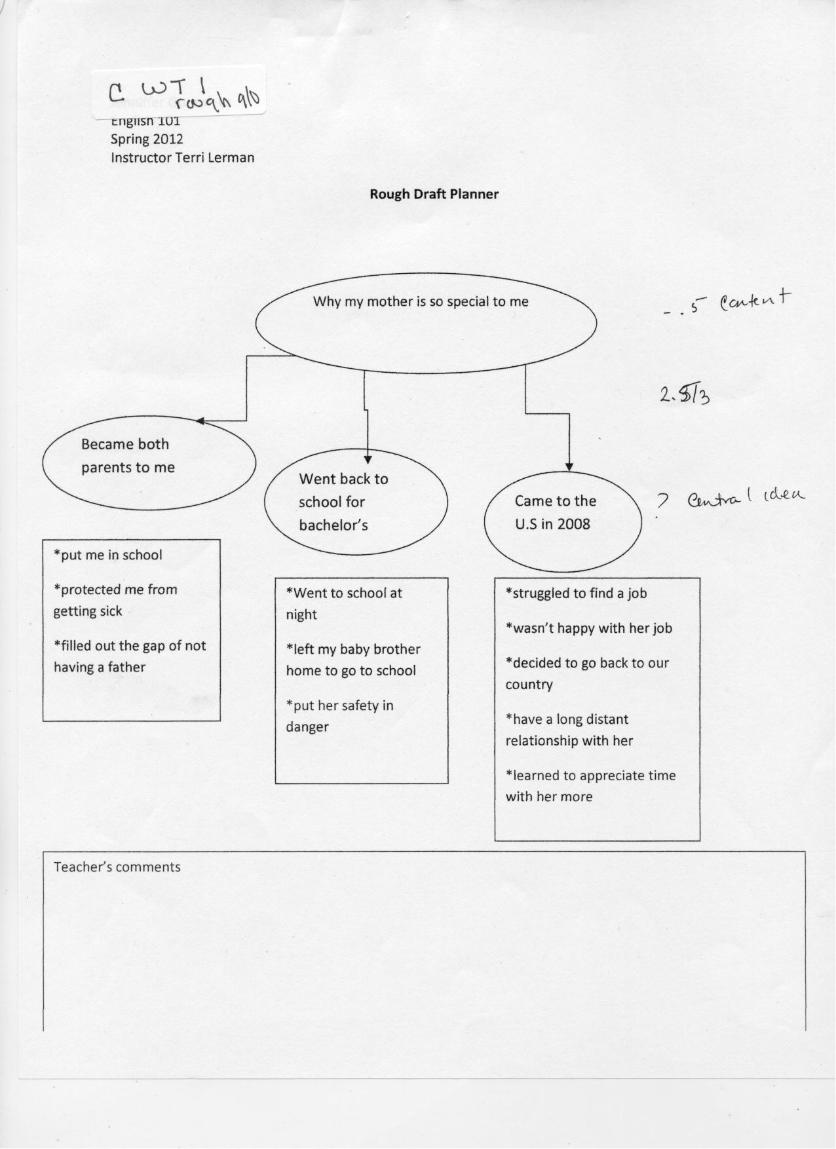
organizer. For Writing Task 1, Subject C organized her information well, showing a clear
relationship visually between the main concepts and the subconcepts. However, two of the
subconcepts were specific enough to be supporting details rather than ideas. Note in the
image below that Subject C used the subconcepts “went back to school for bachelor’s” and
“came to the U.S. in 2008” to support the thesis that her mother is special.
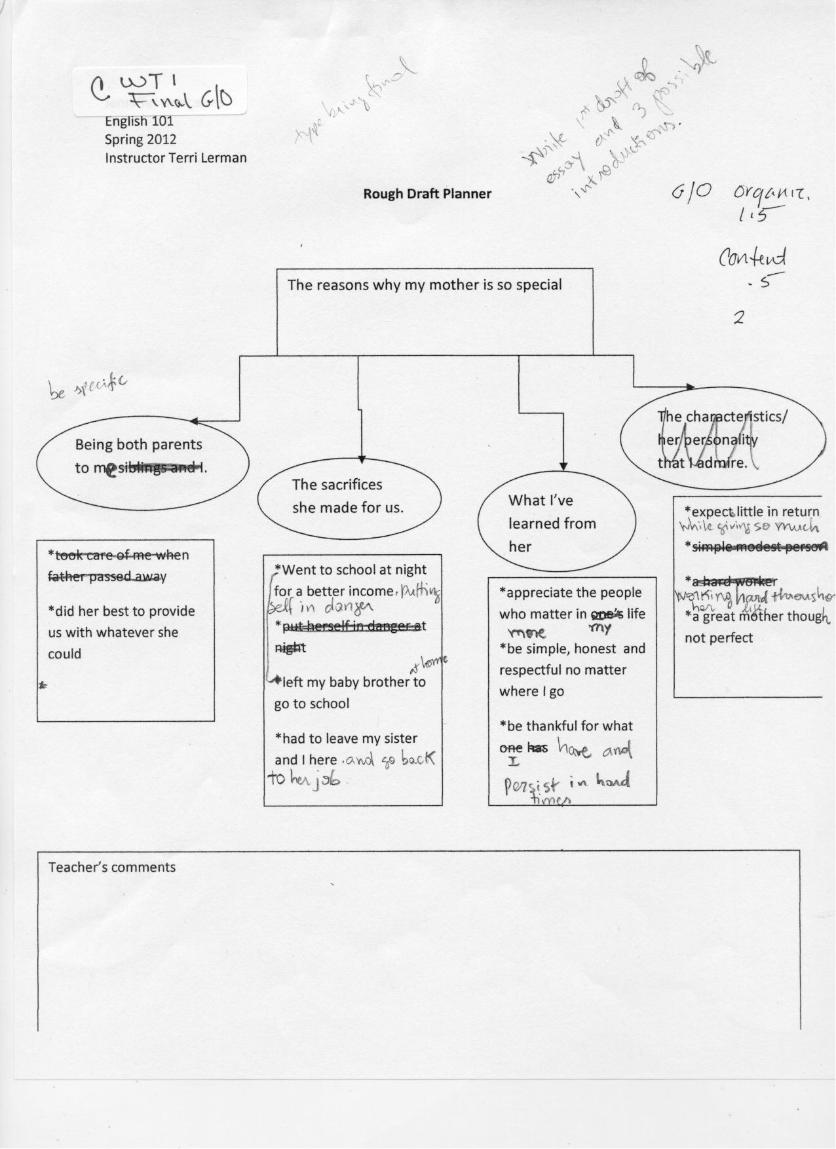
After receiving teacher feedback on the rough graphic organizer for Writing Task 1,
Subject C revised it and expanded her subconcepts so they became broader ideas rather
than supporting details. She used “the sacrifices she made for us” and “what I’ve learned
from her” instead. However, the details supporting these subconcepts still needed
development because, in some cases, they were not specific but rather behave as further
explanation of the subconcept. For example, under the more clearly defined thesis “what
I’ve learned from her [mother],” Subject C wrote, “appreciate the people who matter in my
life, be simple honest and respectful no matter where I go,” and be thankful for what I
have.” These ideas were broad and could have been subconcepts.
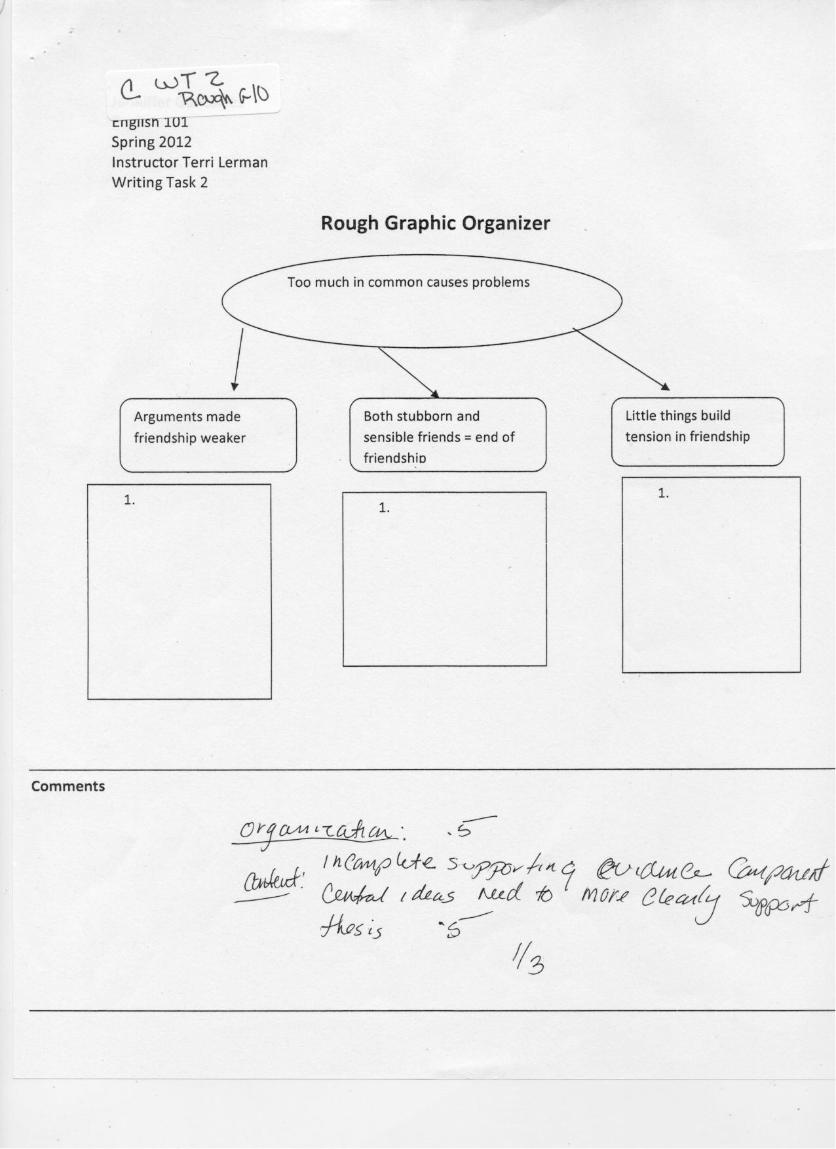
For Writing Task 2, Subject C developed a thesis around the idea that having a friend
with “too much in common causes problems.” The subconcepts for the rough draft worked
well in relationship to the thesis. However the organizer contained no specific supporting
details.
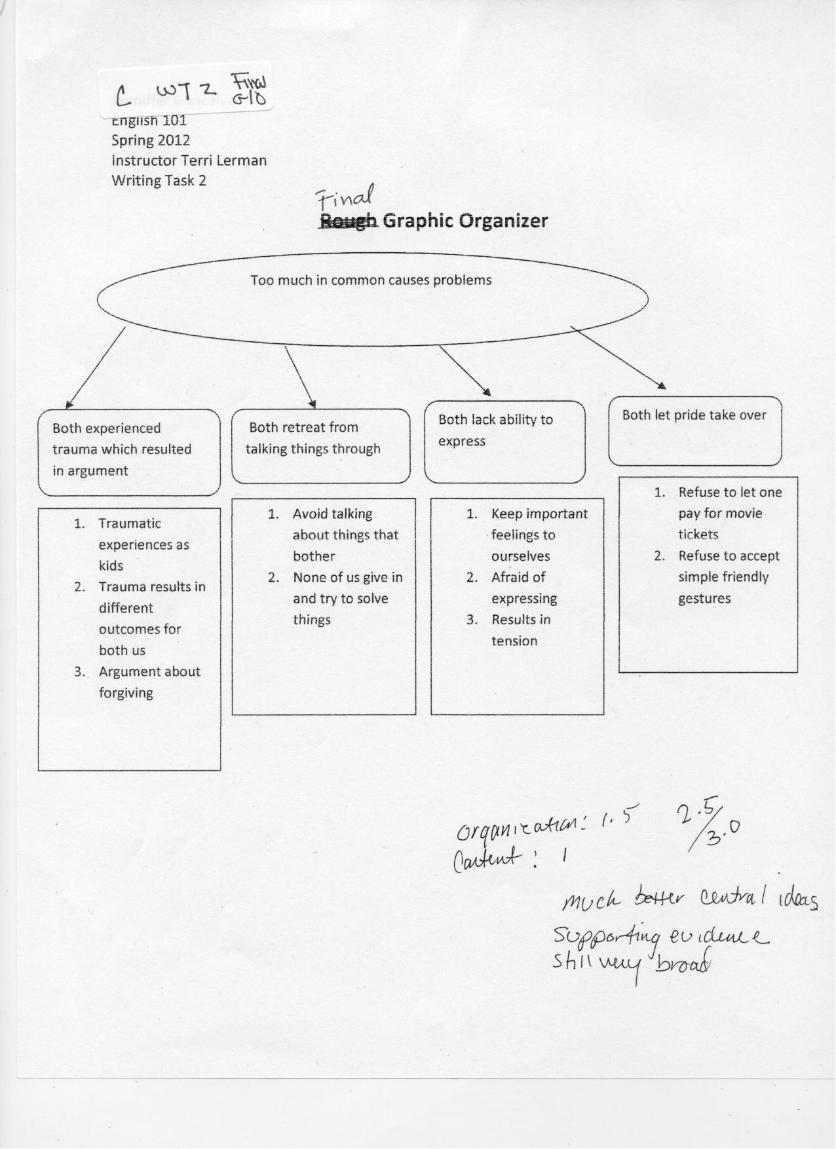
In the final draft of the graphic organizer for Writing Task 2, Subject C modified her
subconcepts, showing evidence of more critical thinking about the thesis and related ideas.
Also, the final draft contained one more subconcept than the rough draft. Again though,
Subject C, for the most part, did not include more specific supporting details to support her
subconcepts. Instead, her ideas remained broad and acted more as further explanation of
the subconcepts. For example, under the subconcept “both lack the ability to express”
Subject C wrote, “keep important feelings to ourselves” and “afraid of expressing.” These
ideas were restatements rather than supporting details.
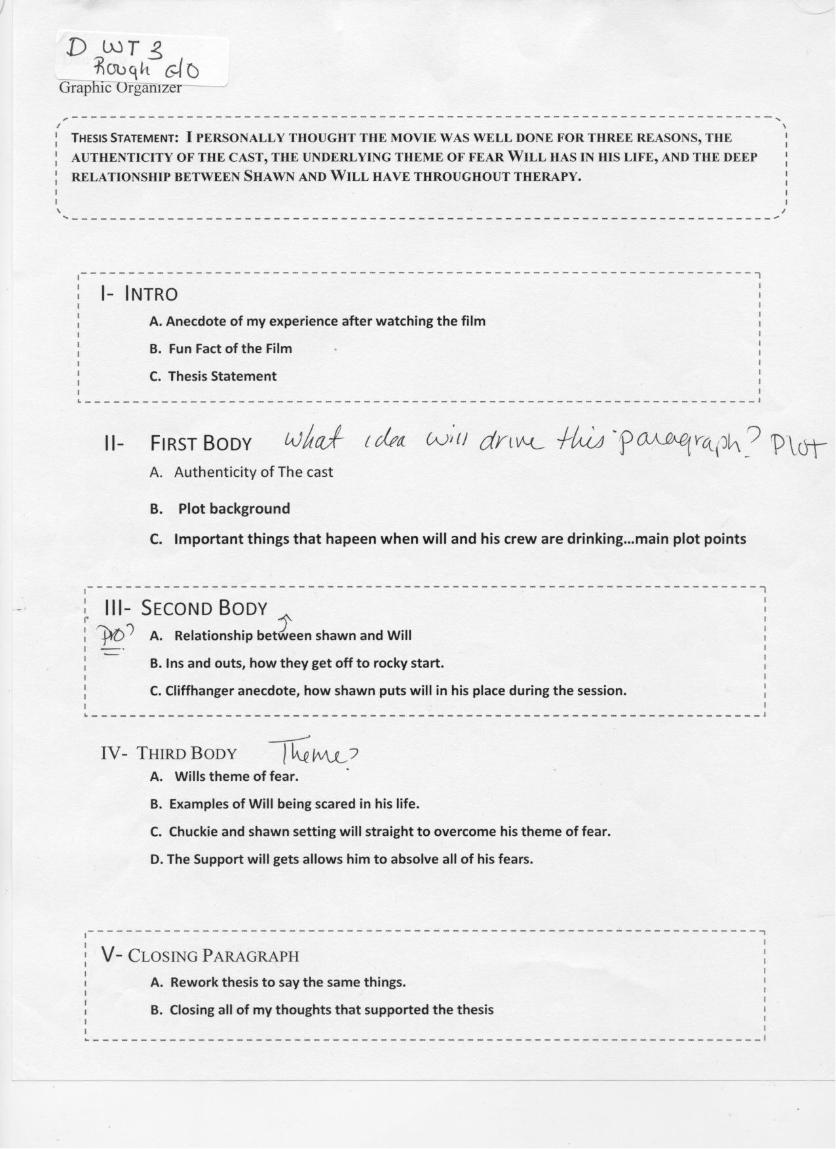
The assignment for Writing Task 3 was to write a critical review, and Subject C
evaluated the movie Avatar. In the rough graphic organizer, Subject C included only two
subconcepts to support her thesis statement that “despite its stereotypical and predictable
plot, Avatar and its tech power takes your imagination to a world of fantasy.” In her first
subconcept, she stated that the “screenplay gets predictable, but the animation keeps you
watching.” This subconcept includes two broad ideas more appropriate for at least two
separate paragraphs. In her second subconcept Subject C stated that, “Avatar can be
compared to Dances with Wolves.” This subconcept did not go far enough to present a clear
idea though it implied that the plot was not unique. The supporting details for each of these
two subconcepts were, for the most part, also broad and redundant, restating ideas in the
subconcepts themselves.
In the final draft of the graphic organizer for Writing Task 3, however, Subject C
demonstrated a clearer understanding of organization and idea development. The thesis
remained basically the same, but three clear subconcepts were supported by some more
specific details that showed that Subject C understood the hierarchical nature of the ideas in
her graphic organizer. For example, under the subconcept of “plot” for the first subconcept
on her graphic organizer, Subject C listed two specific bulleted points to support the idea
that critics compare the plot of Avatar to Dances with Wolves. Still, while Subject C seemed
to more clearly understand the basic concept of a central idea supported by sub-ideas, she
was still struggling with citing specific details.
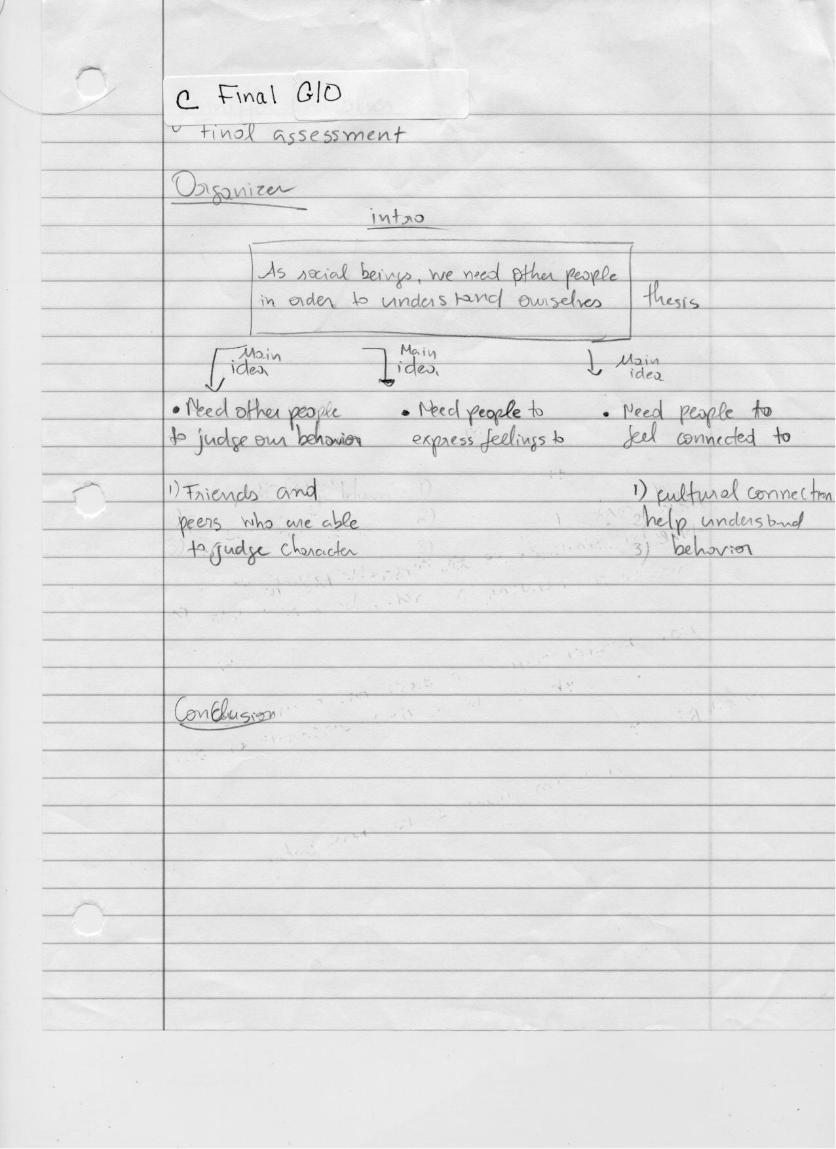
For her final assessment, Subject C created a graphic organizer that demonstrated an
understanding of the hierarchical nature of ideas in the essay, although she included very
few specific supporting details for the subconcepts she listed on the organizer. Still, ideas
were organized visually to represent the ideas in the final essay.