Analysis of Change in Graphic Organizers: Subject B
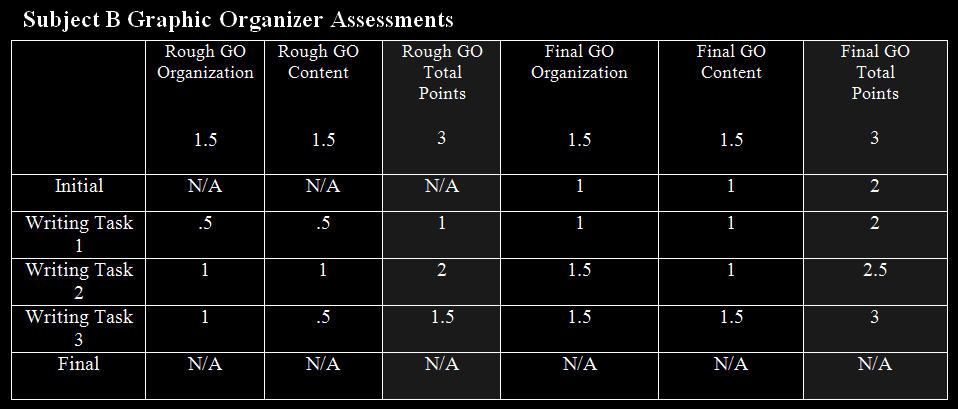
Subject B did not create a graphic organizer in the final assessment and thus did not
demonstrate change in organization or idea development in these two assessments.
However, in each of the writing tasks throughout the study, Subject B showed significant
change as she moved from the rough drafts of her graphic organizers to the final drafts,
especially for Writing Tasks 1 and 3. Teacher feedback and the drafting process enhanced
comprehension of organization and idea development in graphic organizers. Also, in
comparison to the graphic organizer created for her initial assessment, graphic organizers
for each of the three writing tasks became more detail-oriented and worked to show more
clearly the central idea and the relationships between subconcepts and the central idea. The
essential information in the graphic organizers for the writing tasks also illustrated clearer
more logical arrangement.
By the end of the study, Subject B demonstrated that teacher feedback and the drafting
and revision process were effective in helping her to become more organized and to
develop ideas more thoroughly. However, she had not yet become able to independently
utilize the planning and prewriting strategies from her course work and needed continued
emphasis on these.
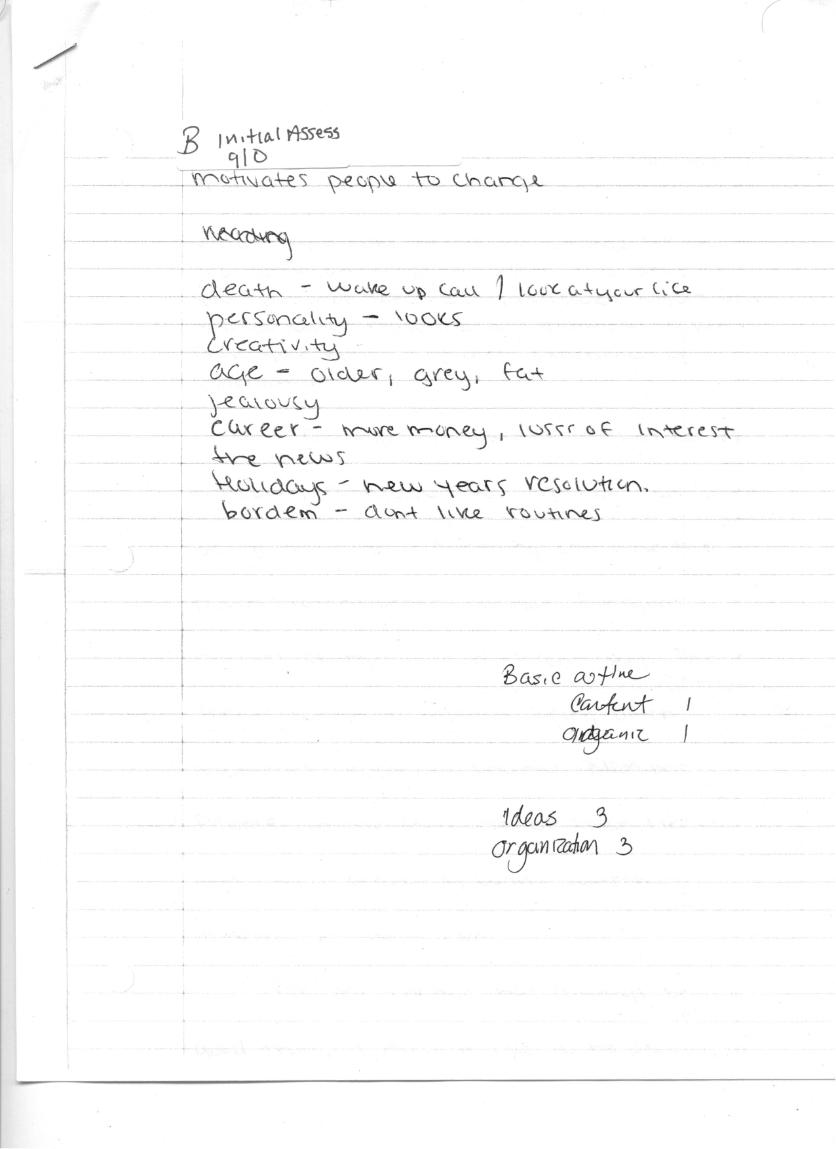
In her initial assessment, Subject B created a list of subconcepts for her thesis idea and
listed more specific supporting details beside these subconcepts. This initial graphic
organizer showed the relationship between the main concept and the subconcepts and
contained some essential information. However, the central idea was broad and undefined,
and the subconcepts could have used more development through the citation of specific
supporting details. For example, in response to the prompt asking students to explain
what it is that motivates people to change, Subject B simply stated as her central idea,
“motivates to change.” Underneath this phrase were the words “death” and then “wake up
call/look at your life.” This worked as a subconcept to support the idea that experiencing a
death can motivate people to change. If two or three details supporting this subconcept
were listed beneath the word “death,” the graphic organizer would have been more
complete. Also, after this initial idea at the top of the list, the other subconcepts were not
complete ideas and did not have supporting information to help clarify them. For instance,
“personality” was on the list but it was unclear how “personality” might motivate someone
to change. Also, the only other idea beside the word “personality” was “looks.” It is unclear
what this might mean in relation to “personality.” Each of the items on the list of
subconcepts should have been in phrase format to help with clarity.
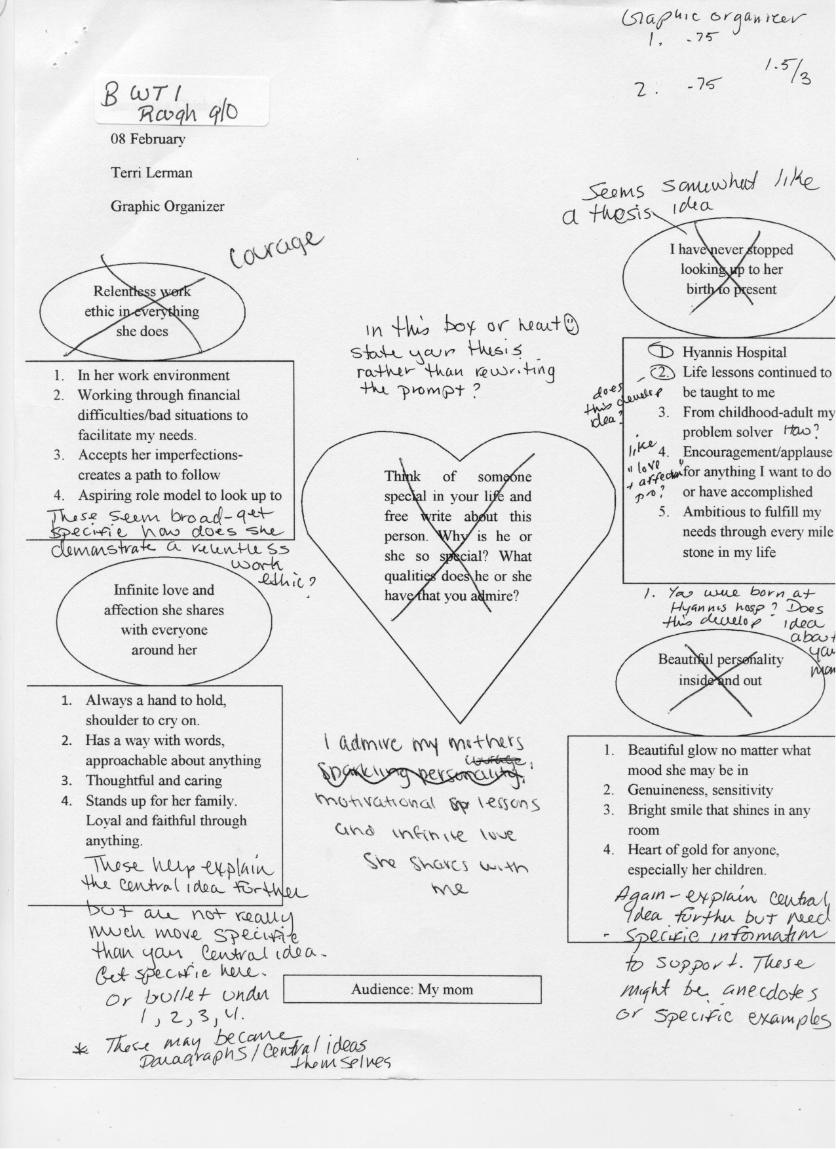
After receiving written feedback and conferencing with the teacher about the rough
graphic organizer, Subject B made revisions that clarified the ideas and their relationships to
one another. The central idea was written at the top of the page instead of the writing
prompt and, while in some instances the supporting details could have still been more
specific, in the final organizer most of them were more focused. Also, the central idea and
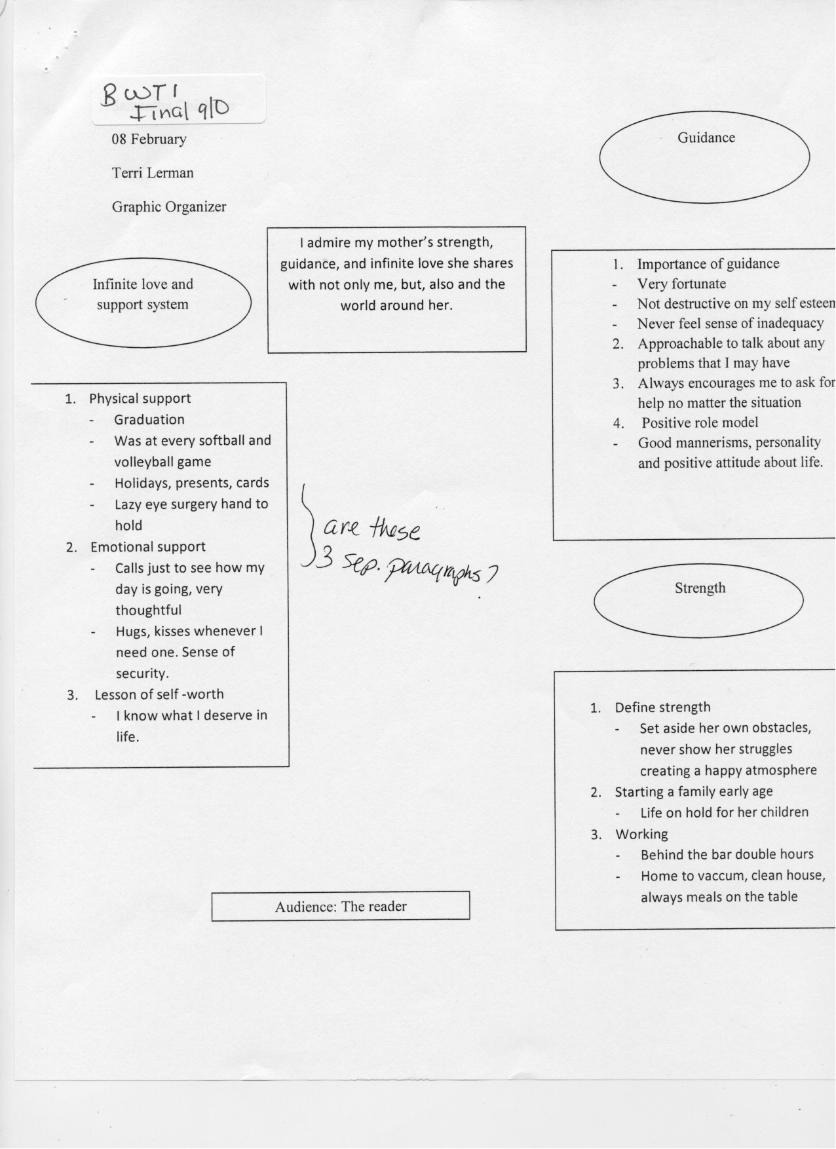
subconcepts were clearer and more succinct. For example, under the subconcept of
“strength,” Subject B created another category for “working” and then placed specific details
such as the fact that her mother works “behind the bar double hours” and “Home to vacuum,
clean house, and place meals on the table.”
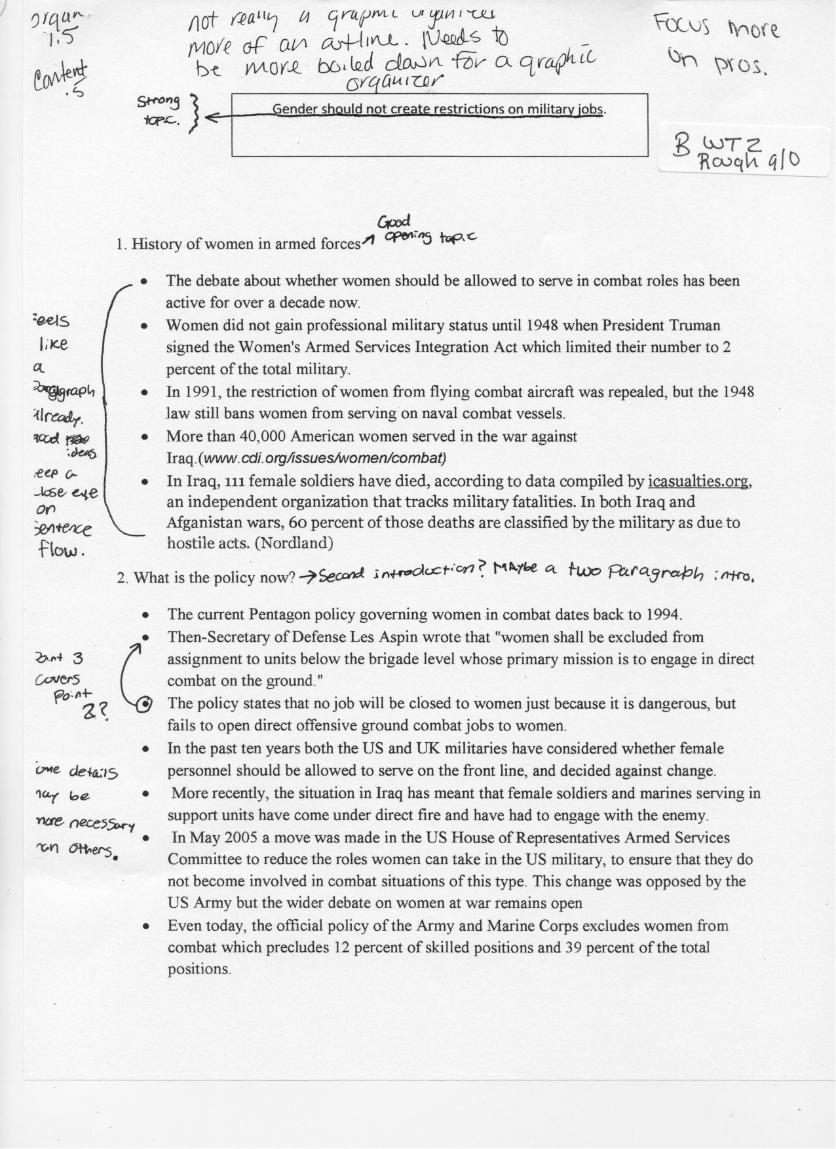
Again, for Writing Task 2 Subject B created a graphic organizer more thorough than that
of her initial assessment. This time, however, it was in the form of an outline. The thesis
statement or central idea in this organizer was very clear. She states, “Gender should not
create restrictions on military jobs.” The subconcepts did not clearly support the thesis but
worked more as background information for the central idea. They also were such broad
topics as to be prohibitive for a college writer to cover effectively. For example, the first
subconcept was “History of women in the armed forces” and the second was “What is the
policy now?” I suggested that she boil the ideas down further in the final organizer to
illuminate the key ideas that clearly support the central idea.
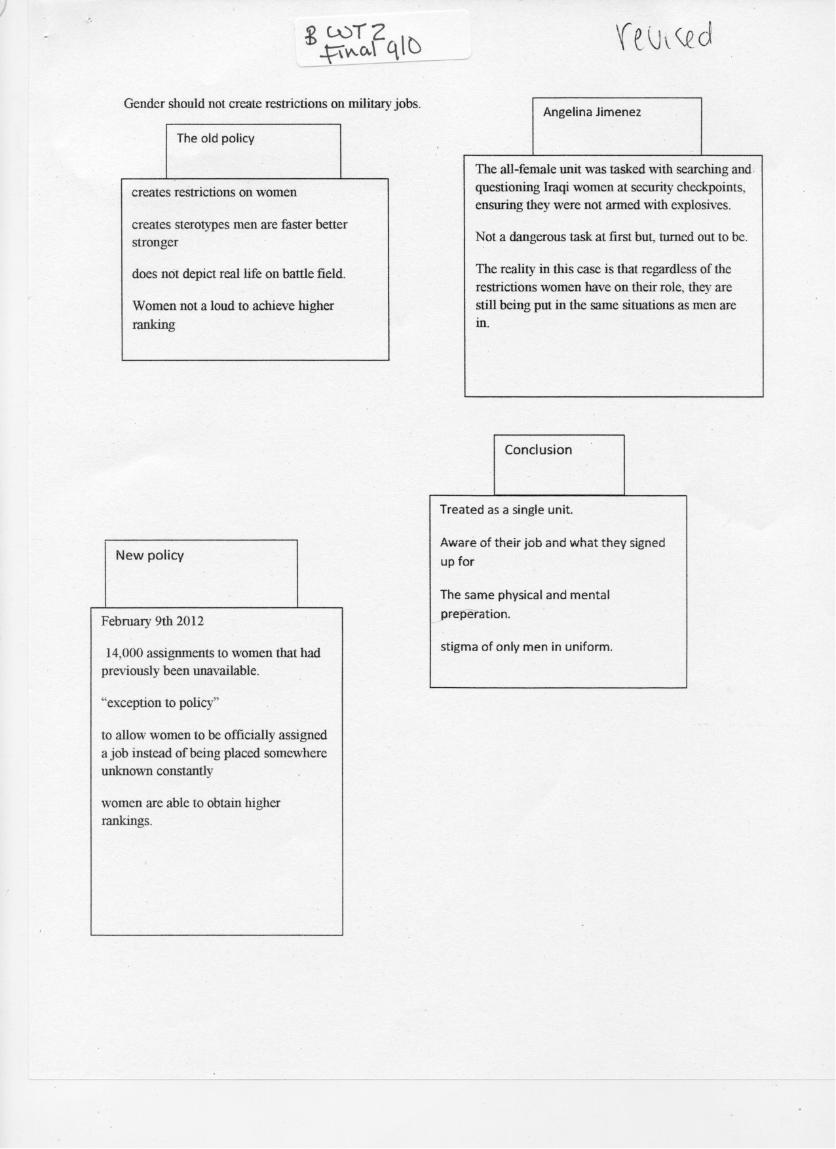
In her final graphic organizer for Writing Task 2, Subject B narrowed her ideas and created an organizer that
is more visual. She did still have trouble with specific details for her subconcept “The old
policy” using broad explanatory ideas such as “creates restrictions on women,” “creates
stereotypes men are faster, better, stronger,” and “women not allowed to achieve higher
ranking.” However the other subconcepts did include more specific supporting details. For
example, for the subconcept “Angelina Jimenez,” Subject B listed details about Jimenez and
her unit. Under the subconcept “New policy,” she wrote “14000 assignments to women that
had previously been unavailable.”
The final graphic organizer for Writing Task 2 showed that Subject B was wrestling with a
difficult topic and the concepts of organization and idea development. However, it also
showed growth in comprehension.
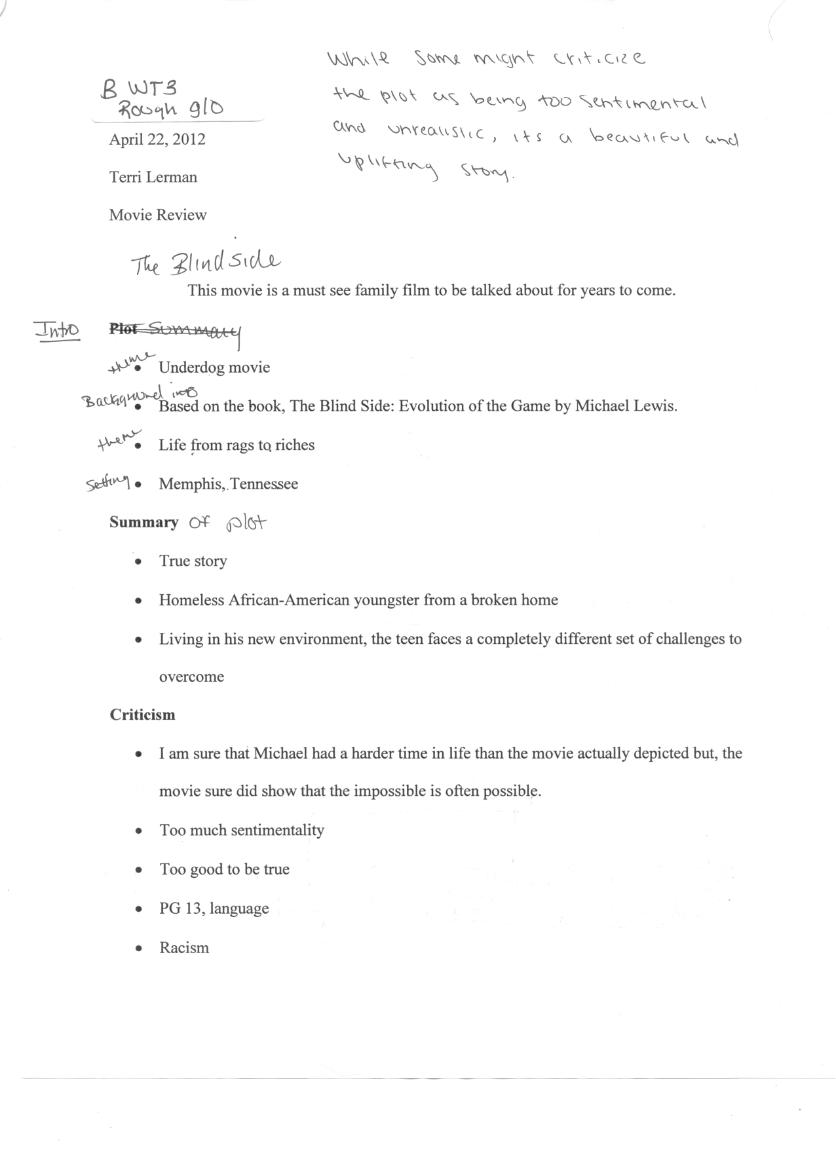
For Writing Task 3, Subject B also created an outline for her movie review rather than a
graphic organizer. However, the outline contained somewhat more focused subconcepts.
For this task Subject B reviewed the movie The Blind Side, stating that “this movie is a
must-see family film.” Her first body paragraph subconcept was “Summary” and more
specific details support this than in previous organizers. The next body paragraph heading
on the rough graphic organizer was “Criticism.” This was eliminated altogether on the final
draft of the graphic organizer. The supporting details were not so much details as further
explanation of the criticisms that could be made against the film.
The final graphic organizer of Subject B’s movie review refined the central idea,
subconcepts, and supporting details further, and showed a clearer relationship between the
main idea and the supporting ideas and details. For example, under the subconcept
“Important messages learned for families” she listed “role models-Michael used his
resources around him: family, coaches, teachers and community to become successful.”
These details supported the subconcept and helped develop it.
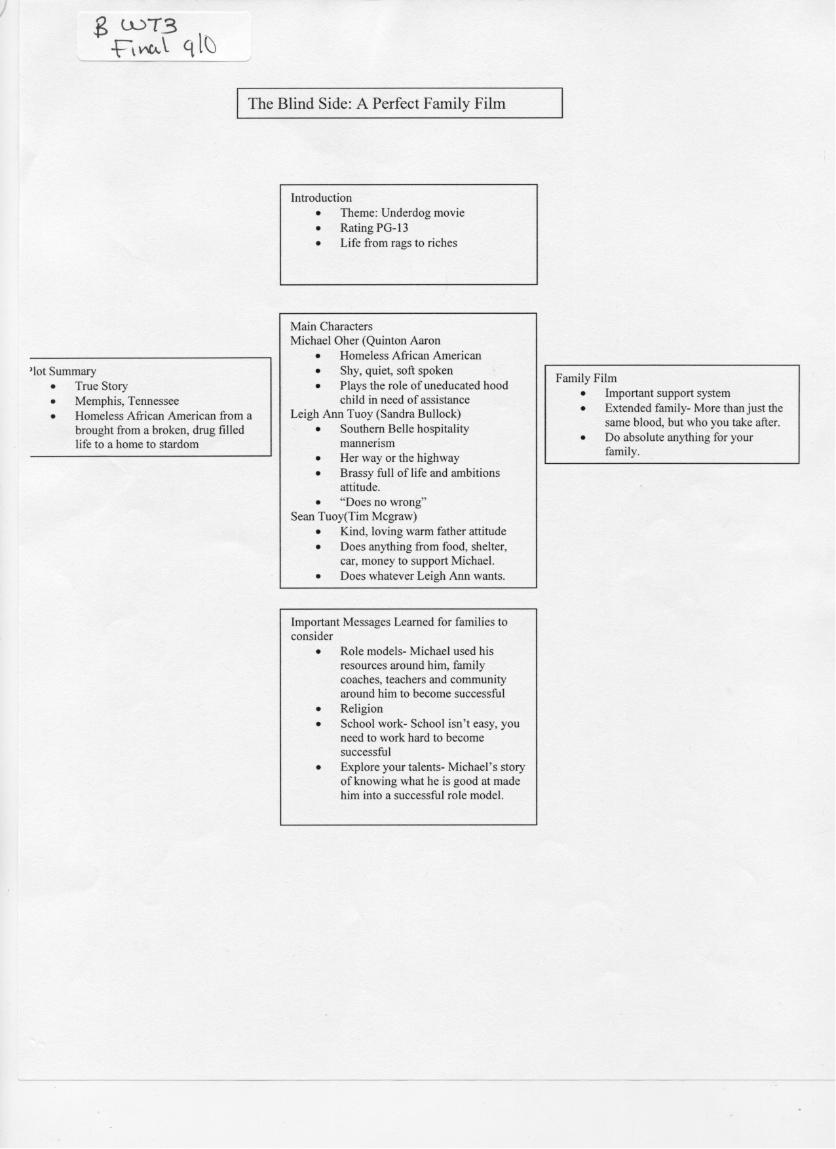
This third set of organizers showed progress in comprehension of the prewriting and
planning process because the ideas were more clearly defined. However, Subject B was still
in need of teacher scaffolding at the end of this study and was not yet practicing prewriting
and planning strategies at a fully independent level.
